
By train to Switzerland
Switzerland is easily accessible by train from the other European countries such as the Netherlands, and it is faster than you think. Many Swiss cities, including Bern, Zurich and Lugano, can be reached in around 6-8 hours with just a simple change in Cologne or Frankfurt. The night train takes you daily directly to Basel and Zurich.
In this post:
- Superfast during the day with ICE to Basel, Bern and Zurich, among others
- Direct overnight train to Basel and Zurich
- Advantages of travelling to Switzerland with an Interrail pass
- The cheapest option: the Deutschland-Ticket
- Features of the Swiss Travel Pass (Flex)
Fast ICE connection to Basel
The most common route starts with the ICE towards Cologne and Frankfurt. This high-speed train runs several times a day to both Cologne Hauptbahnhof and Frankfurt Hauptbahnhof. In Cologne you can change trains to Basel (6 times a day), in Frankfurt you can change trains to several Swiss destinations, including Basel, Bern, Zurich, Chur, Thun, Interlaken and Lugano (1 to 6 times a day).
The fastest travel time from Utrecht Central to Basel is about 6 hours, cities like Bern and Zurich can be reached in about 7-8 hours. Plan your trip and book your tickets on Deutsche Bahn‘s handy website, where you can also plan your own transfer times. Single tickets from any station in the Netherlands to the main Swiss destinations, including Basel, Bern and Zurich are available from 58 euros.


Onward travel to other Swiss cities
From Basel SBB, many Swiss cities are easily accessible with reliable and very punctual trains of the SBB (Swiss Railways). Changing trains is simple and quick, but don’t forget to take a look around Basel SBB station – especially the station hall with beautiful murals and the façade of the monumental station should not be missed!
You can be in Bern in an hour, Zurich in an hour and a half and Chur in just over two hours. Lugano, in the Italian-speaking south, can be reached with a stunning drive through the Alps via the Gotthard base tunnel or the panoramic Gotthard route.
Destinations with only one change in Germany: Basel, Bern, Zurich, Landquart, Chur, Thun, Interlaken, Zug, Bellinzona, Lugano.
Tip: plan extra transfer time
Although the fastest connection from Utrecht to Basel is 5:55, but then everything has to run on time
It is therefore wise to build in some extra transfer time in Frankfurt when booking your tickets. A transfer of 30 to 45 minutes gives you more security as well as room for a coffee or sandwich at the station.
Landscapes along the way: not just any train journey
Why take the train? It’s not only in Switzerland that you can enjoy pure pleasure, the route south has plenty to offer too. Arrival and departure in Cologne are always particularly spectacular, where the imposing Cathedral right next to the station is a highlight in itself. Here, the train crosses the Rhine, and you have a great view of the water and the city. Then the ICE takes you at high speed through the rolling Westerwald, a peaceful region full of forests and hills. Just before Frankfurt, the city’s modern skyline unfolds – high-rise buildings, gleaming steel and glass, almost un-European. And further south, towards Basel, the landscape changes slowly. You drive along the foothills of the Black Forest, through wine hills and dense forests. The landscape becomes increasingly Alpine, and before you know it, you’re in Switzerland. Read more about this route to Switzerland in the article To the source of the Rhine.


To Basel and Zurich by night train
For those who want to save time and travel to Switzerland in a relaxed sleep, the night train from the Netherlands to Basel and Zurich is an ideal choice. In your ‘hotel room on wheels’, you will cover hundreds of kilometres in the dark while sleeping and arrive in Switzerland in the early morning.
This international train service, part of the Austrian Railways’ (ÖBB) Nightjet, departs daily from Amsterdam Centraal, Utrecht Centraal and Arnhem and continues to Basel and Zurich after a few stops in Germany.
The night train offers different comfort classes, depending on your budget and preference:
- Sleeper coach: compartments for 1, 2 or 3 persons with real beds, including washbasin.
- Lying coach (couchette): shared compartments for 4 or 6 persons with berths
- Seat coach: the most economical option, with normal seats.
In the sleeping and lying cars, bedding is provided and you will receive a small breakfast.
With an Interrail pass to Switzerland
For those who do not only want to travel to Switzerland, but also want to visit some destinations within Switzerland or discover beautiful stretches, the Interrail Pass is in many cases the best and most economical option. With the 4-day pass, for example, you can choose four travel days to travel across Europe within a month – ideal for a return trip from the Netherlands to Switzerland as well as two days locally.
For your return trip from the Netherlands to any Swiss destination, you need 2 travel days. You can use the remaining days for train journeys within Switzerland – for example, on panorama trains, regional routes or day trips to the Alps.
Spot cheap to Switzerland
You can also reach Switzerland inexpensively with the economical Deutschland-Ticket, the ideal slow travel ticket for all public transport in Germany. Basically, the Deutschland-Ticket gives you a return ticket from Venlo, Arnhem, Nijmegen or Hengelo to Basel for just 58 euros. This ticket is valid on all regional trains in Germany and is therefore valid from the Dutch stations mentioned above.
You can also reach Basel Bad station in Switzerland with this ticket, from Venlo in about 11 hours with 4 or 5 changes.
You can plan the route quite conveniently in Deutsche Bahn’s journey planner, by selecting the ‘means of transport’ option for ‘regional transport only’. You will then get a comprehensive overview of the journey with the Deutschland-Ticket.

Travelling within Switzerland: Swiss Travel Pass
The Swiss Travel Pass is the ultimate travel pass for those who want to explore Switzerland comfortably, flexibly and inexpensively. This pass offers unlimited travel on public transport throughout the country and is available for 3, 4, 6, 8 or 15 consecutive days. One card gives you access to an impressive network of trains, buses and boats, allowing you to travel effortlessly from one scenic destination to another. The Swiss Travel Pass Flex allows you to travel for 3, 4, 6, 8 or 15 days within a one-month period. These travel days are up to you and do not have to be consecutive.
What do the Swiss Travel Pass & Swiss Travel Pass Flex offer?
- Unlimited travel: Free travel on the extensive network of the SBB (Swiss Railways) and regional carriers.
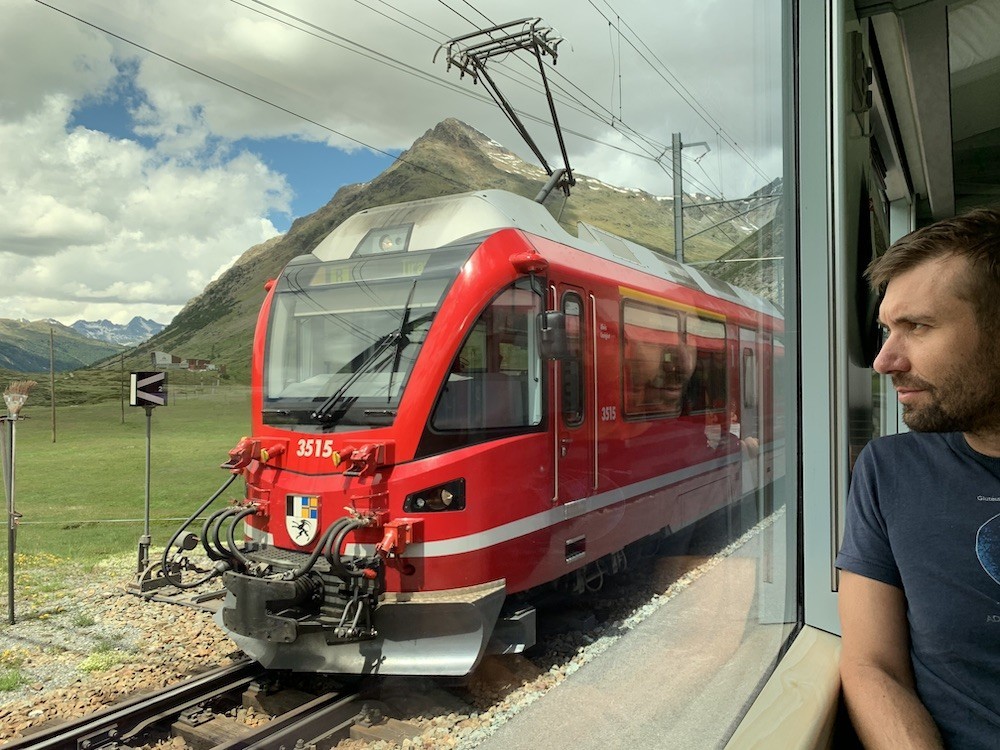
- Panorama trains: Includes famous routes such as the Glacier Express, Bernina Express, and the GoldenPass Line (reservations sometimes required).
- Public transport in cities: Free use of trams and buses in more than 90 cities and towns.
- Entry to museums: Free entry to over 500 museums, including the Swiss National Museum and the Olympic Museum in Lausanne.
- Mountain railways and cable cars: Free or reduced fares on many popular mountain routes, such as to the Rigi, Stanserhorn and Schilthorn.
- Children free: With the free Swiss Family Card, children under 16 travel with their parents free of charge.
Who is the Swiss Travel Pass suitable for?
The pass is ideal if you want to see and do a lot in a short time, without worrying about separate tickets or route planning. Whether you want to soak up culture in Zurich, hike in the Alps, or enjoy a boat trip on Lake Lucerne – the Swiss Travel Pass puts the whole of Switzerland at your feet. The big difference with the Interrail Pass: the Swiss Travel Pass (Flex) also includes museums, buses, public transport in more than 90 cities and various boat connections and cable cars. So it pays to check if the expense pays off.


Leave a Comment