
Let yourself be enchanted by thick forests and winding valleys, mountaintop castles and riverbank vineyards on this adventurous rail journey across central Europe.
Reading time: 10min

Let yourself be enchanted by thick forests and winding valleys, mountaintop castles and riverbank vineyards on this adventurous rail journey across central Europe.

May 8, 2020, marks the 75th anniversary of the surrender of the Wehrmacht in Berlin, which brought the Second World War to an end in Europe. As the last remaining witnesses to these dark pages of history pass away, many places of reflection and commemoration are only gaining in significance.
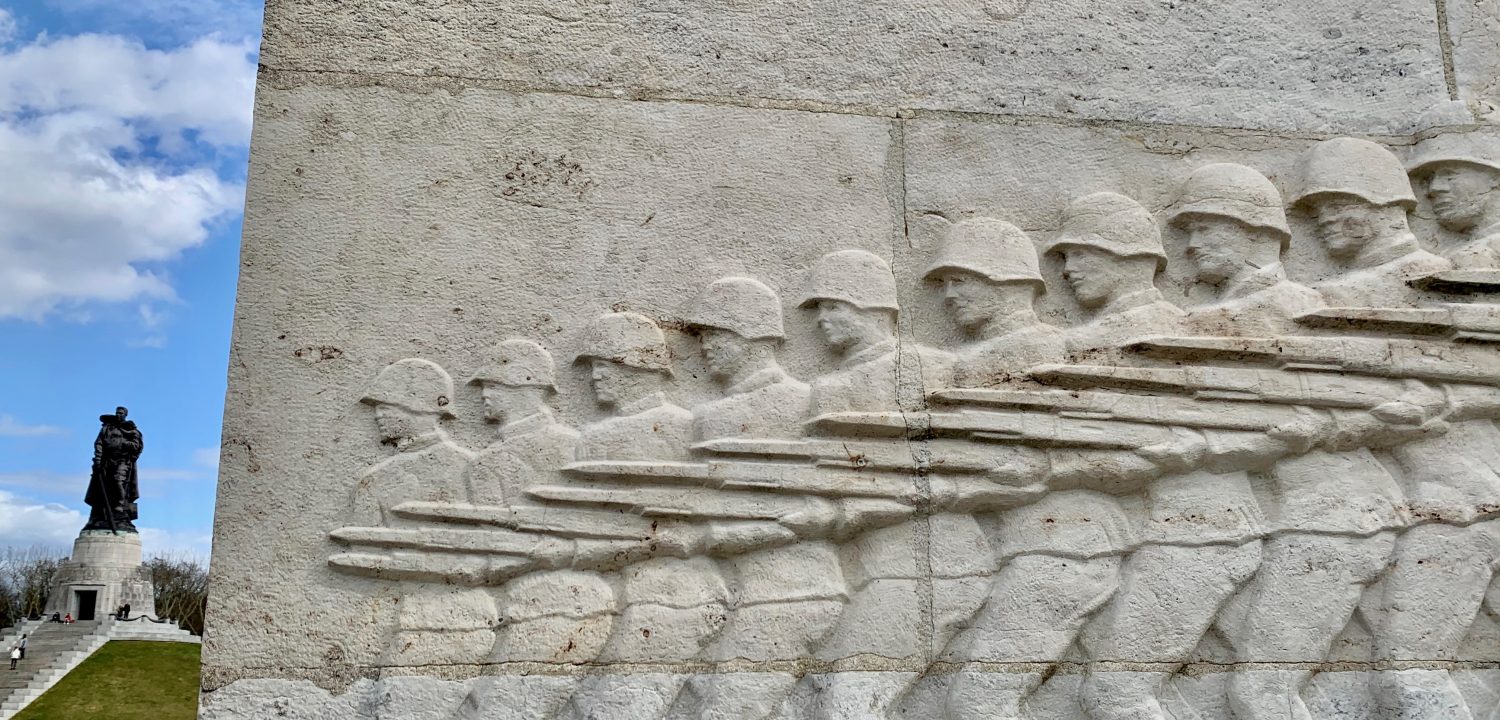
In the early hours of April 16, 1945, the 2.5 million strong Soviet Army began its assault on Berlin in the hope of defeating Nazi Germany once and for all. After 16 days of heavy fighting and at times even hand-to-hand combat, 200,000 soldiers and civilians had lost their lives and much of the city lay in ruins. Despite the devastation, several landmarks and battle scars still survive today scattered across Berlin, serving as an important reminder to the last major offensive of the Second World War in Europe.

Relaxing, eco-friendly travel without the queues and security checks of an airport? Here are our top reasons why you should ditch flying and travel the 500 km between Berlin and Munich, one of Germany’s busiest routes, by train.

As a student, I would often find myself waiting on the platform at Essen railway station, on my way to university, weighing up whether or not to throw caution to the wind and jump on the train to Westerland/Sylt instead. Whenever I saw the train, the lyrics to the famous German song “Westerland” by Berlin punk band Die Ärzte – a somewhat sarcastic homage to this most touristic and middle-class of German seaside resorts – would run through my head. “Oh I have such a yearning, That I think I’m going insane,” it goes. Sod university, I’d think. “Take me back to the North Sea…” Alas, I never did jump on the train. I was a student after all and I couldn’t afford a holiday anywhere, let alone to the wealthy island of Sylt, where Westerland is located.

The air is thick with cinnamon and cloves, roasted almonds and sweet pastries. Artisans busy themselves selling handmade decorations and handicrafts to curious shoppers. There’s stollen (a traditional sweet bread filled with candied fruits) to fortify you and hot mulled wine to warm you up. The Silesian Christmas Market in Görlitz is full of festive cheer, but Germany’s easternmost town is steeped in history and there’s a lot more here to discover.

Visit the birthplace of modern design on this tour of the best Bauhaus sites across eastern Germany. The pioneering principle of the Bauhaus school – namely functional elegance – continues to shape the world we live in today, from the utilitarian design of our homes to the modular furniture we fill them with.

Relaxing, eco-friendly travel without the queues and security checks of an airport? Here are our top reasons why you should ditch flying and travel the 500 km between Berlin and Frankfurt by train.

Berlin’s main railway station, the Hauptbahnhof, lies at the heart of Europe with trains departing for Amsterdam and Prague, Moscow and Bern, Vienna and Warsaw. The station is a monument to modernity, a palace of glass – but there’s much more to see than the station itself. So if you’re in the neighbourhood or a passenger passing through, get out and start exploring.

Hannover is a major city and cultural hub in northern Germany located on the route between Amsterdam and Berlin or Munich and Hamburg. Famous for its trade fairs and its royal house, Hannover is often overlooked as a destination but at our loss. Here are the top 5 reasons why you should hop off in Hannover and get discovering.
| Cookie | Duration | Description |
|---|---|---|
| Hotjar | Hotjar records user behaviour while interacting with the website. It allows us to identify user interface issues and correct mistakes. |
| Cookie | Duration | Description |
|---|---|---|
| Google Analytics | Google Analytics is used to measure visitor volume and their behavior. |


